



Common Types of Burglaries and How to Prevent Them – Expert Insights
As an emergency locksmith working daily in Budapest, I encounter firsthand the exact methods burglars use to break into homes. Based on my professional experience, I have outlined the most frequent intrusion techniques and practical ways to secure your property against them.
Home security relies on proactive prevention rather than luck. Let’s examine the most common entry methods, ranging from opportunistic tests to aggressive forced entry!
1. Classic Handle Checks (The Opportunistic Intruder)
This is the most widespread and entirely opportunistic method. Burglars walk through apartment buildings testing door handles to find properties where residents forgot to lock their doors or simply left them latched.
2. Fixed-Knob Testing in Modern Residential Parks
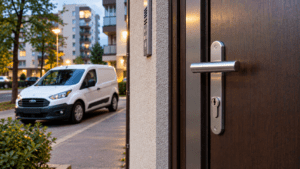
Newer apartment complexes often feature exterior fixed knobs or pull handles on entrance doors. Many residents live with a false sense of security, assuming pulling the door shut provides automatic protection. Burglars exploit this negligence by randomly targeting “unlocked” entryways around the handle area.
3. Door Prying and Forcing (Aggressive Mechanical Entry)
When a door is locked, burglars often resort to brute physical force. Using large screwdrivers, crowbars, or wrecking bars, they attack the gap between the door leaf and the frame. Their goal is to force the latch bolt out of the strike plate or deform the door frame.
4. Lock Snapping and Cylinder Pulling
Lock snapping (also known as cylinder breaking) is one of the fastest and quietest professional burglary techniques. If a lock cylinder protrudes past the protective escutcheon plate, intruders grip it with specialized tools or pliers and apply lateral pressure until the rotor snaps at its weakest factory point, allowing them to turn the mechanism with a screwdriver.
5. Bumping (Impressioning with Bumping Keys)
A bumping key is a specially modified key cut to the lowest profile depth. The burglar inserts it into the lock and strikes it lightly from behind with a mallet or striking tool. The impact causes the internal pins to jump momentarily, allowing the key to turn and open the lock instantly.
6. Entry Through Alternative Openings (Windows and Balcony Doors)
Intruders do not limit themselves to front doors. Ground-floor apartments and family homes are vulnerable to improperly closed, tilt-and-turn windows or patio doors. A skilled intruder can pop open a tilted plastic window in mere seconds.
7. Lock Picking (Non-Destructive Professional Methods)
Though less common in routine domestic break-ins, professional criminals utilize lock-picking tools, tension wrenches, and comb picks to open locks non-destructively, often leaving residents unaware of the intrusion until missing valuables are noticed.